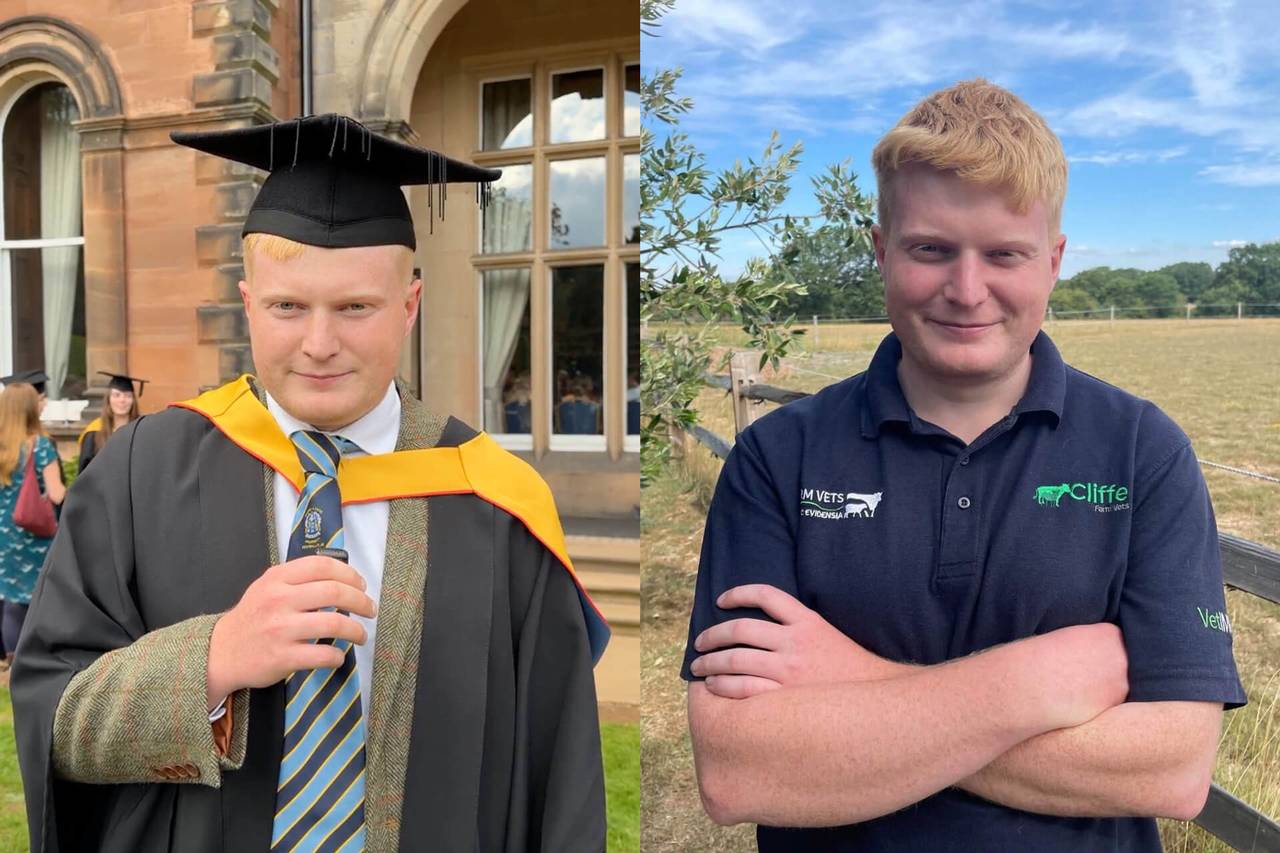
 Five years goes incredibly fast: Charlie reflects on his vet school journey
Read ➔
Posted 6 October
Five years goes incredibly fast: Charlie reflects on his vet school journey
Read ➔
Posted 6 October

7 May 2026
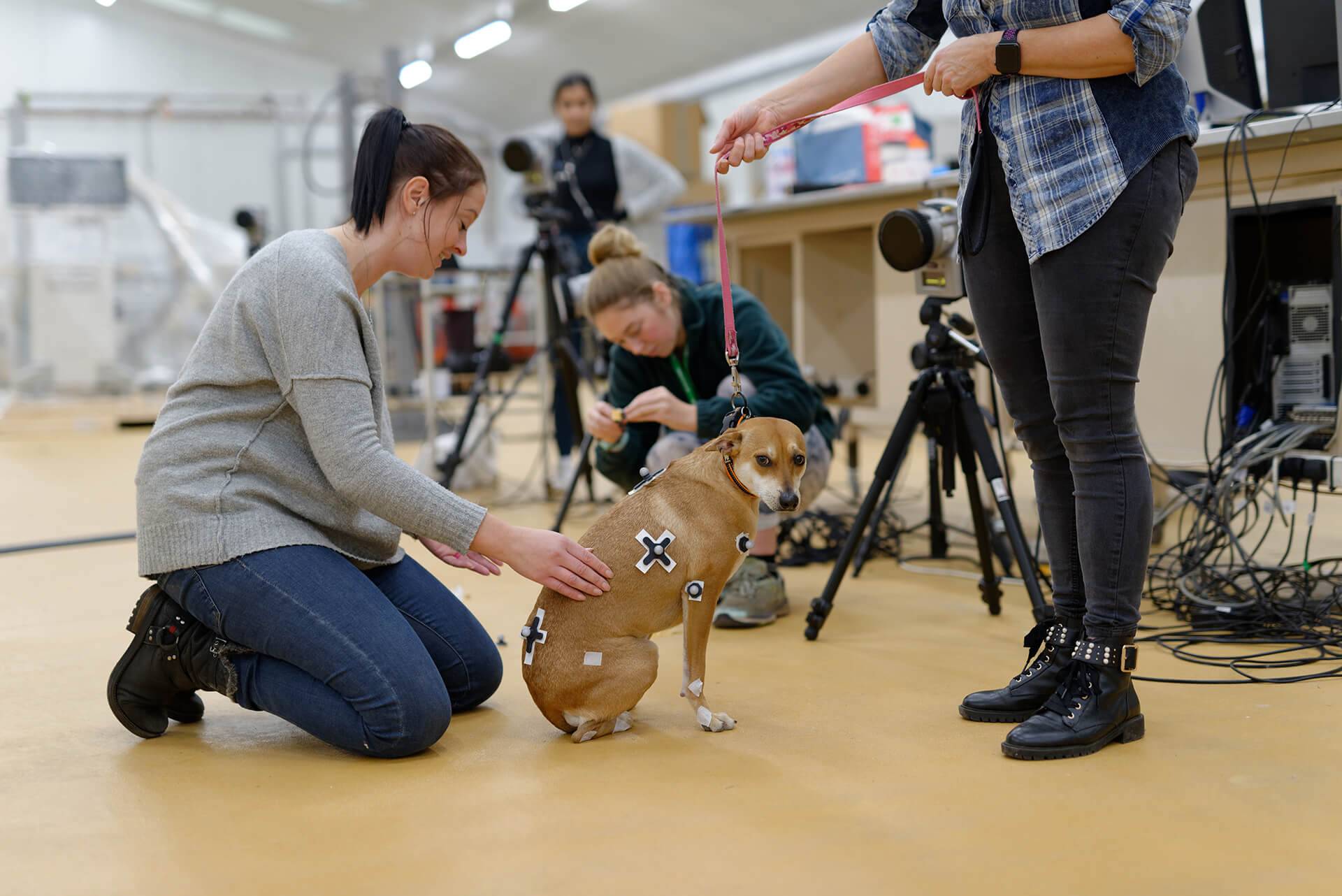
A Harper & Keele Veterinary School lecturer has published a new study on movement in canine amputees.
Dr Zoe Davies, Lecturer in Veterinary Sciences and researcher in biomechanics, conducted her research whilst working at the Royal Veterinary College’s (RVC) Structure and Motion Laboratory. As a Post-doctoral Research Associate, Zoe focused on gait analysis in dogs, humans, and horses.
Dr Davies was initially interested in animal movement on two and four legs but this shifted when she shared an office with a colleague and their dog, who had undergone an amputation.
Fascinated by the adaptation to movement on three legs, she recognised that whilst there is a good understanding of the mechanics of movement in two-legged and four-legged animals, there are very few examples of three-legged movement, or tripedalism, in nature.
Dr Davies said: “When you look at a three-legged dog, when they’re moving fast, the movement looks pretty smooth and regular, it can take a moment to notice that a limb is missing. At slower speeds, it looks a bit messier, there’s a lot of bouncing and it looks like quite a lot of effort so you notice the missing limb a bit quicker.
“Four-legged dogs walk at slow speeds, trot at intermediate speeds and gallop at high speeds. All these gaits show a regularly repeating cycle of movement and can be characterised in terms of the sequences of the limbs, timing of the footfalls and the forces exerted on the ground - I wanted to explore whether three-legged dogs use distinct gaits with increasing speed as we see in four-legged dogs.”
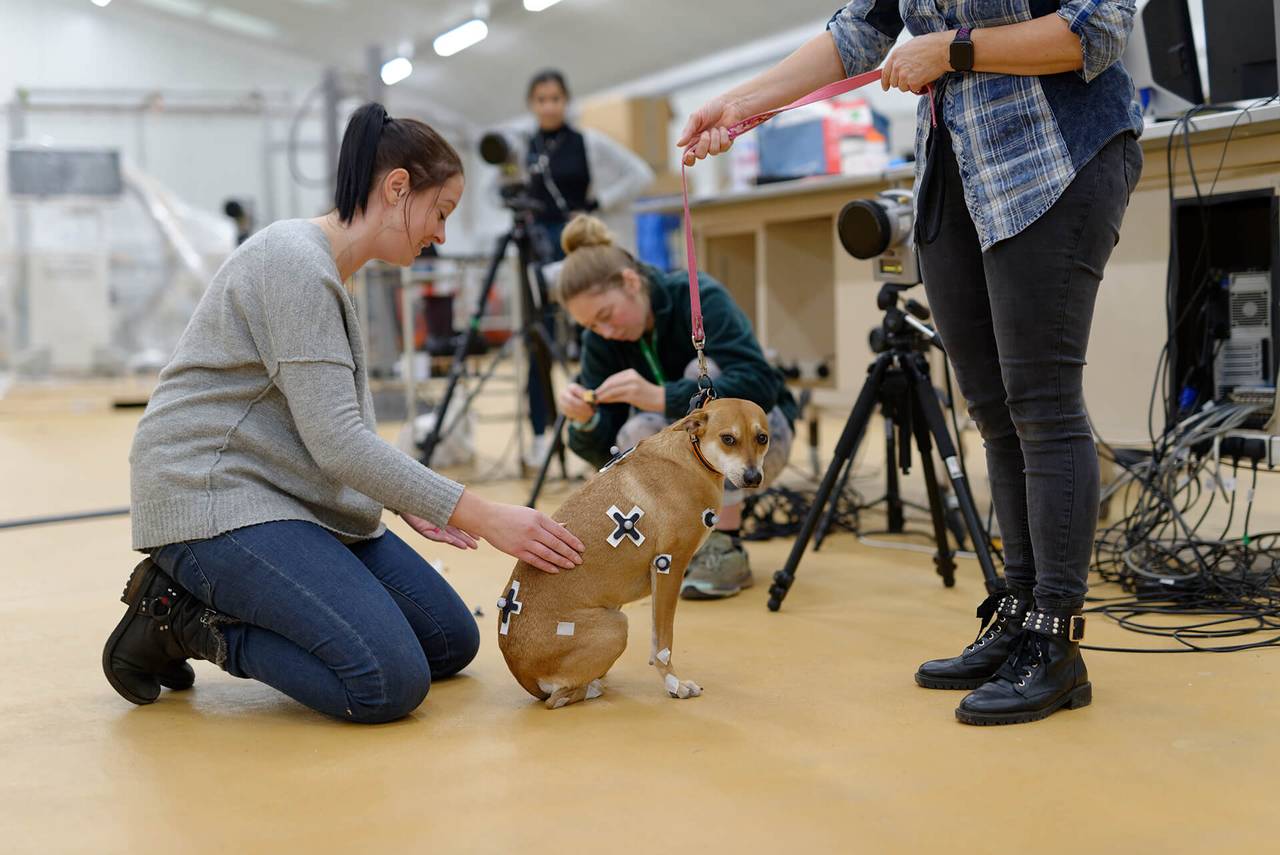
Funded by the Wellcome Trust, the researchers invited canine amputees and their owners to the Structure and Motion Laboratory where data was collected using a 3D motion capture system and force plates to measure the movement of the dogs.
You can view the video data on YouTube.
The results showed that at higher speeds, three-legged dogs used a gallop-like gait, similar to that seen in four-legged dogs. At slower speeds, three-legged dogs used two different strategies.
The first strategy was a slowed down version of the gallop and the second was a more unusual gait where the remaining pair of limbs walked, in the same way a human might walk, and the single limb bounced at a higher frequency, so it hit the ground more than once per stride.
When looking at the forces acting on the limbs, the single limb in forelimb amputees took around 50% of the weight of the dog, while the forces in hindlimb amputees were much more evenly distributed across the three legs.
The findings will help veterinary professionals in their understanding of musculoskeletal injury and rehabilitation. Additionally, understanding movement on three legs can provide valuable insight for legged-robots, allowing them to become increasingly capable of coping with limb loss.
You can view the full study in the Royal Society Proceedings B.
Photo: Jorn Cheney
Five years goes incredibly fast: Charlie reflects on his vet school journey
Read ➔
Posted 6 October
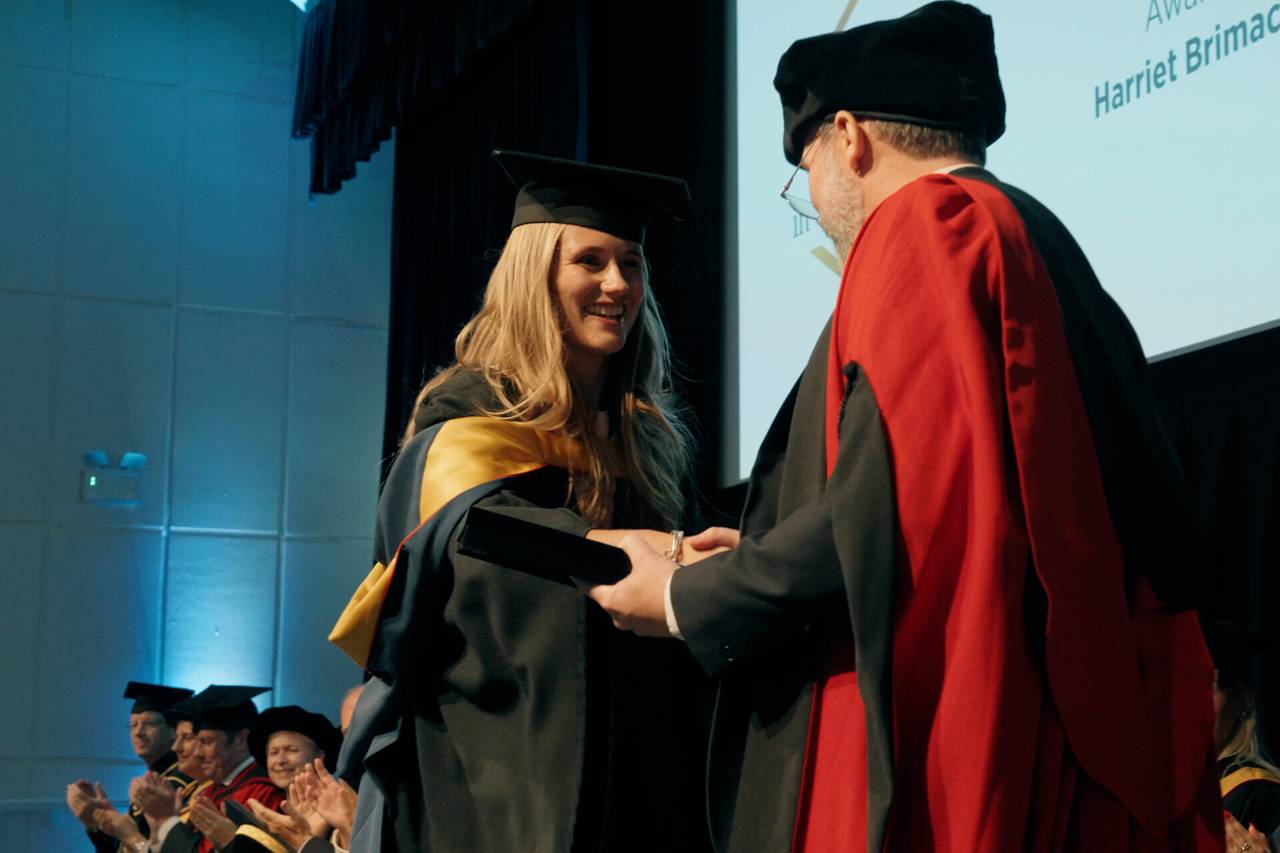 From dairy farm to farm vet
Read ➔
Posted 2 October
From dairy farm to farm vet
Read ➔
Posted 2 October
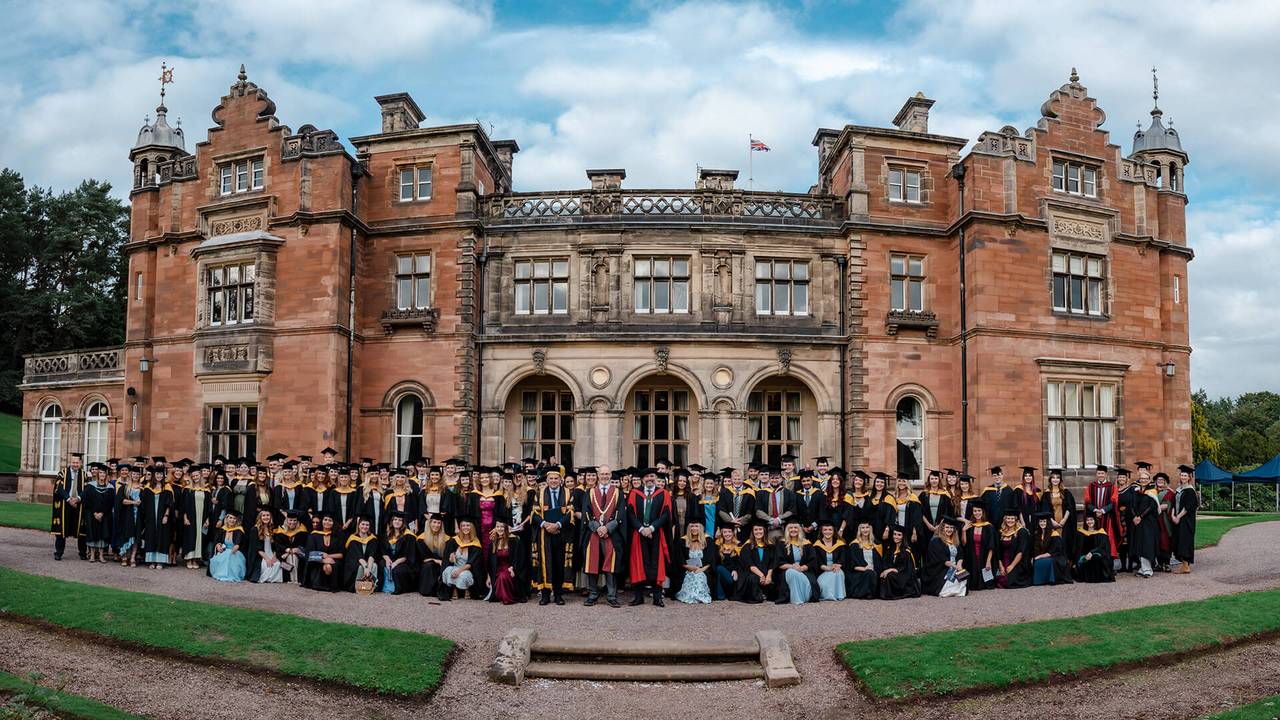 Second cohort of vets graduate from Harper & Keele Veterinary School
Read ➔
Posted 18 September
Second cohort of vets graduate from Harper & Keele Veterinary School
Read ➔
Posted 18 September
 Study reveals unique movements of canine amputees
Read ➔
Posted 7 May
Study reveals unique movements of canine amputees
Read ➔
Posted 7 May
We use cookies to ensure that we give you the best experience on our website. If you continue without changing your settings, we'll assume that you are happy to receive all cookies on the website. However, you can change your cookie settings at any time.